Futuristic holographic interface showing blockchain networks and legal documents with glowing blue elements.
|

Key Legal Terms Every Crypto Entrepreneur Should Know

Launching a crypto project means navigating a complex legal landscape where the wrong terminology, or worse, ignoring it entirely, can mean the difference between compliance and costly enforcement action. This glossary defines the essential legal concepts every crypto entrepreneur should understand when building in the blockchain space. Securities Law Anti-Money Laundering & Compliance KYC can…

AML compliance framework protecting blockchain network with digital shield and verified documentation

AML for Digital Asset Businesses: How to Build a Program That Scales

Most founders don’t lose sleep over “regulators.” They lose sleep over getting and keeping critical partners: banks, payment processors, institutional customers, and marketplaces. The businesses that move fastest are those that can confidently and consistently answer basic compliance questions. That’s where AML comes in to show operational readiness. If you touch fiat rails, custody customer…

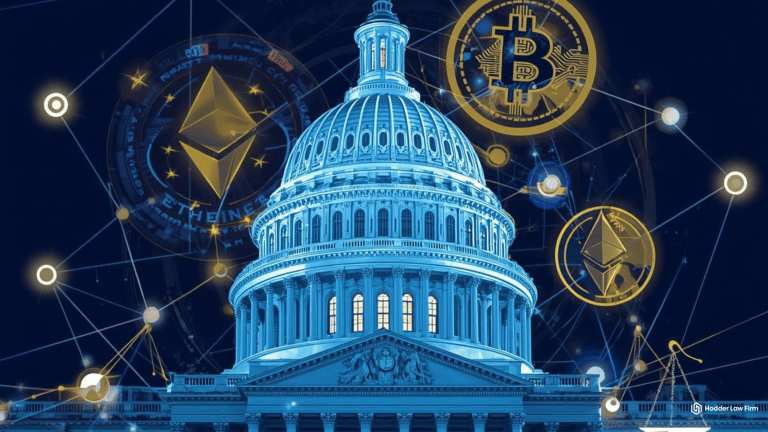
US Capitol building with blockchain network and cryptocurrency symbols representing CLARITY Act legislation

The CLARITY Act Explained: Developer Safe Harbors, Stablecoin Rules, and Self-Custody Rights

For years, digital asset developers and cryptocurrency businesses have operated in regulatory limbo. A protocol developer could face securities registration requirements. A wallet creator could be prosecuted for money transmission, and a stablecoin platform offering rewards could be accused of operating an unlicensed bank. The Digital Asset Market Clarity Act (CLARITY Act), currently advancing through…

AI data privacy and legal discovery dispute involving news media
|

OpenAI, Discovery, and Privacy: What the New York Times Litigation Reveals About Data Disclosure in AI Lawsuits

OpenAI has taken its dispute with The New York Times beyond the courtroom and into the public arena, criticizing the newspaper for allegedly seeking to intrude upon user privacy by demanding access to millions of ChatGPT interaction logs. What OpenAI’s public statements omit, however, is a key legal development: a federal court has already ruled…

2026 digital asset broker definition under IRS regulations with legal compliance icons

A Crypto Christmas Legal Checklist: What Digital Asset Holders Must Do Before the 2026 Reporting Season

(Legal analysis only — not financial, tax, or investment advice) As the 2025 calendar year closes and digital-asset holders prepare for 2026, regulatory obligations for cryptocurrency reporting are entering a new era. The Internal Revenue Service (IRS), Treasury Department, and other U.S. regulators have implemented the most sweeping digital-asset reporting rules to date, including the…

Bitcoin coin and encryption keys in front of a government building, symbolizing U.S. crypto regulation, DOJ Bitcoin seizure, and digital asset custody law.
|

U.S. Government’s $14 B Bitcoin Seizure: Legal Implications of Weak-Key Vulnerabilities and Asset Forfeiture

The U.S. Department of Justice (DOJ) recently announced the civil forfeiture of approximately 127,271 BTC (valued at roughly $14–15 billion) connected to a transnational crypto-fraud and forced-labor network operating out of Cambodia. What’s most striking, however, is that some of the wallet addresses listed in the U.S. government’s seizure filings had already been flagged nearly…

Government courthouse with digital network overlay representing cybersecurity law and data protection compliance.
|

DoubleZero’s SEC Win: First Token No-Action Letter in Years

September 29, 2025, marked a significant milestone for the crypto and decentralized infrastructure world. The U.S. Securities and Exchange Commission’s (SEC) Division of Corporation Finance issued a no-action letter to DoubleZero, signaling it would not recommend enforcement action against the project’s launch of its 2Z token, so long as the token is distributed under the…

Illustration of the United States map with digital geofence location pins and data lines.
|

Geofence Warrants, Charlie Kirk, Utah Investigations, and the Fourth Amendment: What You Need to Know

The debate over geofence warrants, sometimes called “reverse location” warrants, has been pushed into the spotlight by recent high-profile investigations in Utah. Commentator Charlie Kirk’s name surfaced in public discussion as a touchstone for hypothetical investigative scenarios, raising awareness of how these warrants work and the unresolved constitutional questions they raise. At the center of…

Congress Leads U.S. Crypto Law Progress

From Congress to Compliance: Hodder Law’s Mid-Year Report on U.S. Cryptocurrency Regulation

The first six months of the new administration and 119th Congress have been a whirlwind for cryptocurrency policy in the U.S. From regulatory breakthroughs in Congress to ongoing prosecutions of developers, the picture is mixed. For businesses, developers, and investors navigating the regulatory landscape, this moment feels both promising and precarious. Congress Leads the Way…

Courthouse beside a modern glass office tower at sunset, symbolizing crypto cases shifting to federal courts.
|

After Chevron and Jarkesy: Why Crypto Cases Are Moving to Federal Court

Two Supreme Court decisions, handed down on back-to-back days in 2024, didn’t just tweak administrative law; they redrew the map for anyone building in crypto. Less deference to agencies. More juries. More front-loaded fights about what the statutes say. The rulings, in plain English In Loper Bright, the Court said judges must use their judgment…